Is It Enough?: Caleb Adcox
The following homily was shared at our Sunday Evening Eucharist service 3/15/26.
Readings:
These passages are usually presented as these encouraging, uplifting, underdog style stories. We have David, the one brother too young for Jesse to even consider bringing before Samuel, and the blind beggar with nothing to his name, both chosen by God in spite of having everything stacked against them. That’s a great interpretation, and one that I have definitely been drawn to and encouraged by, but I want to instead focus tonight on the flip side of that. What do we make of David’s brothers, of all the incredibly faithful and qualified and dedicated individuals who God seems to pass up? What do we make of all the blind people Jesus hasn’t healed? We are so focused on the prayers God does answer, on the things He does provide and the people He does call, largely because this is often the emphasis of Scripture, that we don’t make any room to wrestle with all the things God doesn’t do.
But the truth is, most (if not all) of us are in the valley of the shadow of death right now. And while I believe in God’s ability to deliver us from that valley, the psalm doesn’t say that He will. It says that He is with us in the valley. It says He prepares a table for us in the sight of our enemies. There is no mention of deliverance in this life, only the promise that we will one day dwell in the house of the Lord. What we are assured of in this life is nothing but the presence of God. It is very possible that you may die never having been delivered from that thing you have spent your life praying about. It is very possible that you live a life, through no fault of your own, that looks like God has passed you up time and time again for someone else.
A phrase that I’ve picked up from one of the Sunday school teachers at the church I grew up at is, fittingly enough, “You’re not David”. He was using it in the context of David and Goliath, but the point remains more or less the same. What he was saying is that there is a temptation to try to read ourselves into scripture. A lot of us have been taught to approach Scripture expecting it to address our Goliaths, our blindness, our insert other central conflict or antagonist in a Bible story. But the Bible is not a collection of metaphors for our lives, and even if it were, we would be incredibly arrogant (and wrong) to always place ourselves in the position of the protagonists, or the winners, or whichever party has the best outcome overall. Instead, the Bible is the story of who God is, and who we are in light of who God is. God is not the God of all the things you want and nothing you don’t. Christianity is not the religion of being the main character. God’s presence in your life is not something that can be quantifiably shown by outcomes or weighed against the experiences of others. It is simply a fact that God is with you. You don’t have to have your own Goliath to slay, or blindness to be healed, or kingdom to rule. And if you do, it is enough for God not to give you any of those things.
So the question I want to ask is whether or not this is enough for you. Does your trust in God depend on the things He could give you, or is it enough simply that God is with you even in the things you lack?
Amen.
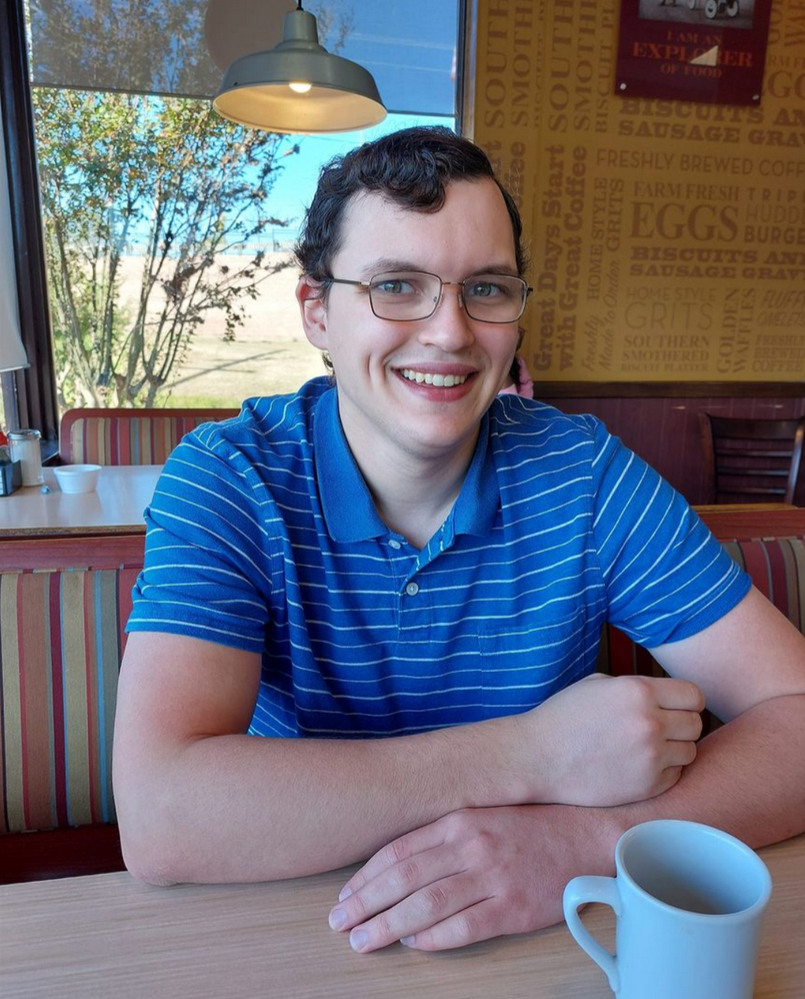
Caleb Adcox is an ACF intern from Bedford, TX. He graduated from Louisiana Tech with a major in Business. A joy to be around and filled with the Holy Spirit, Caleb is always ready with a dad joke, a smile, or a word of consolation. We are so blessed to have him on our team and are excited to see the way God will continue to move through him during his time as an intern and beyond!